Eagle Home Appraisal Cincinnati
Residential home appraisals in Cincinnati
Whether you are pricing a sale, buying out a relative or questioning the county’s value on your house, we write a report that gives you a supported number and shows how we reached it.
Call with the address and what the value is for. We will put the scope, fee and delivery in writing before anyone books an inspection.
Serving Cincinnati and Hamilton County
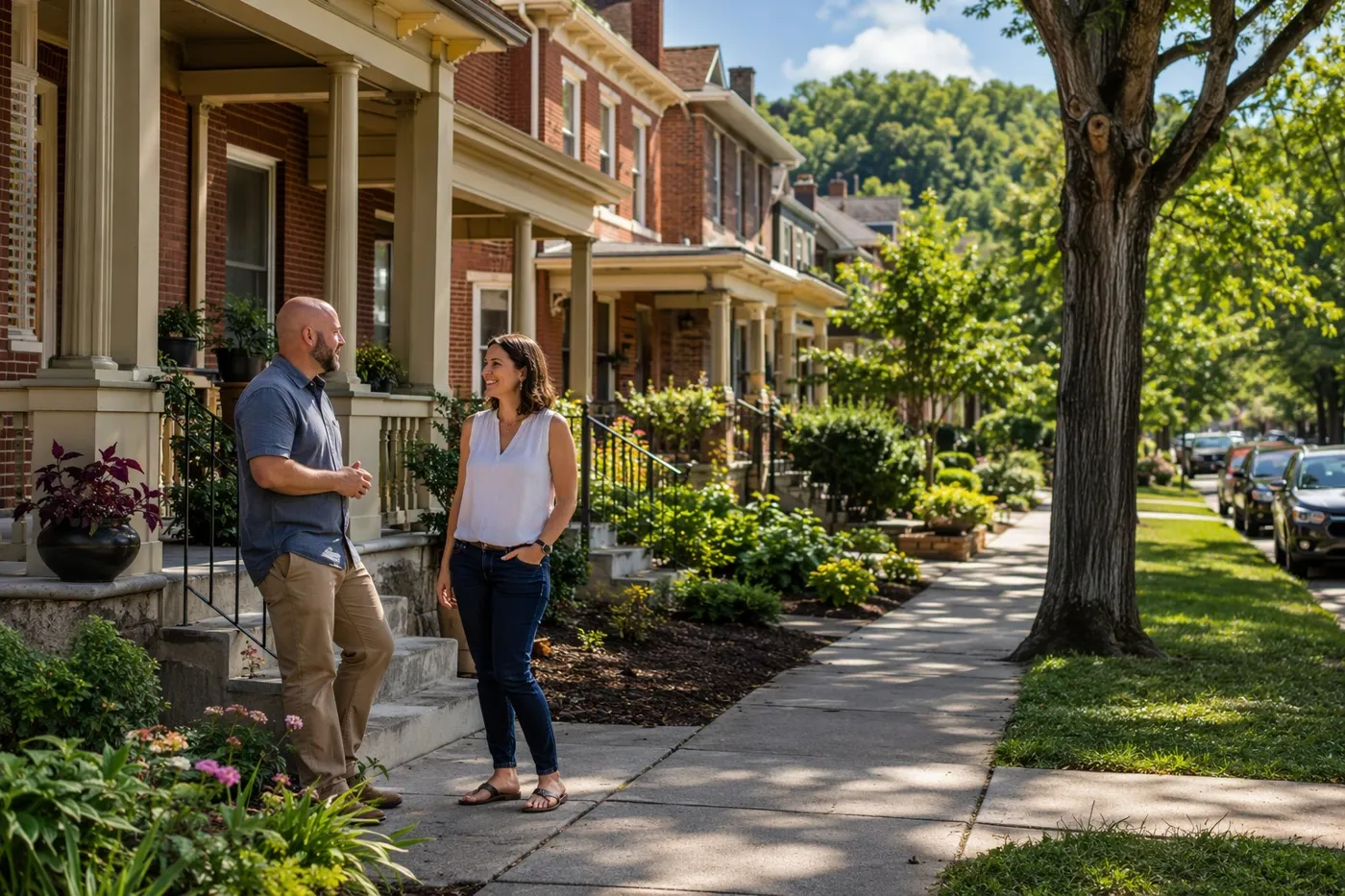
Homes we appraise in Cincinnati.
We appraise single-family homes, condos and multi-unit properties across the city. Plan Cincinnati, the city’s 2012 comprehensive plan, finds single-family housing most concentrated in the neighborhoods farthest from the center. The city’s approved-plans directory names neighborhoods such as Clifton, College Hill, Columbia Tusculum, Hyde Park, Madisonville, Mt. Lookout, Northside, Oakley, Over-the-Rhine, Pleasant Ridge, Walnut Hills and Westwood. Send the address and we will confirm coverage and availability.
What the program fee is, and what ours is
Published VA fee for Cincinnati and Hamilton County: $650 for a single-family home. That is what the VA program sets for appraisals on VA-backed home loans here. It is a program fee, not our private price.
| Property type (VA loan) | VA fee, Hamilton County |
|---|---|
| Single-family home | $650 |
| Individual condominium | $650 |
| Manufactured home | $700 |
| Two- to four-unit property | $800 |
Source: the VA appraisal fees and timeliness table, effective May 1, 2026, which lists Hamilton County in the Ohio group with Cuyahoga, Franklin, Greene, Montgomery and Summit counties. The same table allows 7 business days for those appraisals.
Private assignments, such as a buyout, a pre-sale value or a Board of Revision report, are different. We quote each in writing before work starts. Type and size, access, the effective date and the intended use all shape the scope.

Why Cincinnati owners order one
- Pricing before a sale. A documented value before you list, or before selling to someone you know, gives both sides a place to start.
- Buying out a co-owner. When relatives or co-owners part ways over a property, a supported number beats a guess.
- Questioning the Auditor’s value. An appraisal effective on the right January 1 can back a complaint to the Hamilton County Board of Revision (details below).
- Estates and probate. Values tied to a date of passing are on our estate and probate pages.
- Divorce. For a marital home, see divorce appraisals.
- Inherited-property basis. For a federal figure, see step-up appraisals.
Questioning a Hamilton County property value
Who sets the value. Ohio makes the county auditor the assessor of all real estate in the county, with each parcel appraised at least once every six years (R.C. 5713.01). The Hamilton County Auditor adds that Ohio law also calls for an update every three years.
Where to file. Complaints go to the Hamilton County Board of Revision on the state’s DTE 1 form, filed with the County Auditor. The county takes them from January 1 to March 31, postmarked no later than March 31, and does not accept them by email. Under R.C. 5715.19, a U.S. Postal Service postmark counts as the filing date and a private meter postmark does not. The deadline runs later only if the close of first-half tax collection falls after March 31.
What the Board looks at. The Board rules on value, not on the size of the tax bill. The value at issue is the one on the tax lien date, January 1 (R.C. 323.11), of the year being challenged. When the complaint is that similar homes are not selling at the Auditor’s figure, the county’s evidence guide treats an appraisal effective that January 1 as the best evidence, and gives older and refinance appraisals limited value.
Limits and appeals. As a rule, the same filer gets one complaint per parcel in each interim period, the years from one reappraisal or update to the next, unless something specific changed, such as an arm’s-length sale. A Board decision can be appealed to the Ohio Board of Tax Appeals or the Court of Common Pleas within 30 days after it is mailed.
An appraisal is evidence, not a promised result. The county itself suggests a real estate attorney or professional may help decide what evidence suits a property.
How a residential assignment moves
- Describe the property. Call or write with the address, the type, the purpose and the date the value should reflect.
- Fix the scope. Scope, fee and delivery estimate come to you in writing before any inspection is booked.
- Inspection. An appraiser measures the home, takes photographs and notes its condition and features.
- Compare. Sales from the neighborhood, and the wider city where needed, are analyzed and reconciled.
- Deliver. The written report arrives, and you can ask about anything in the property description that looks wrong.
Ready to start? Call (513) 998-7177 or send the address and purpose.
A few questions that come up.
Can an appraisal help with my Hamilton County property tax value?
It can be evidence. The Board of Revision looks at value on January 1 of the tax year, and the county treats an appraisal effective that date as the best evidence for a similar-sales complaint. It is not a promised result.
What is the deadline to file a complaint?
March 31, postmarked by then, on the DTE 1 form filed with the County Auditor. Email is not accepted.
How do I get a quote?
Call (513) 998-7177 or use the contact page with the address and purpose. Scope, fee and delivery are put in writing first.
Eagle Home Appraisal Cincinnati